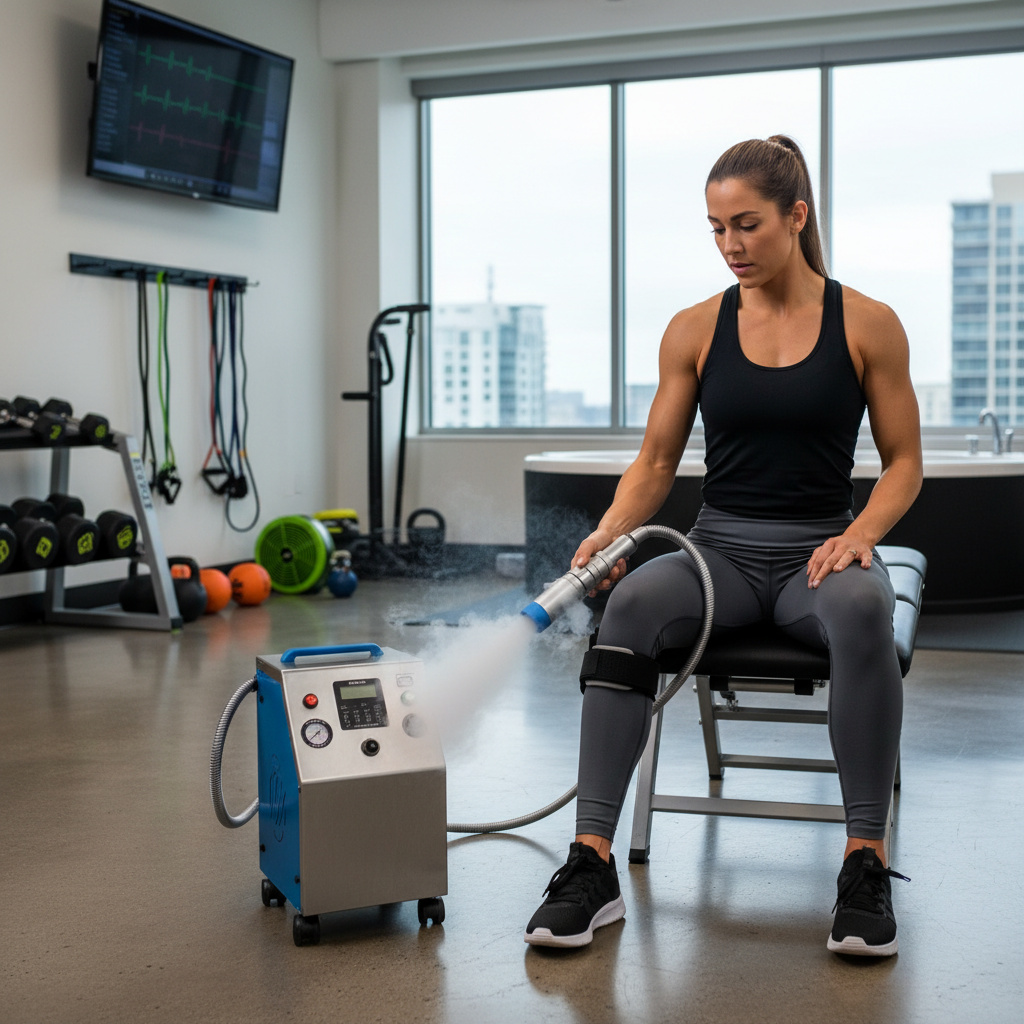
Professional athletes across California—from NFL players in Los Angeles to college competitors at Berkeley, Stanford, and San Diego State—have made cryotherapy a cornerstone of their recovery protocols. But cryotherapy isn't reserved exclusively for elite athletes. Weekend warriors, competitive amateurs, and serious fitness enthusiasts can leverage the same science-backed recovery strategies used by the world's top athletes. This comprehensive guide explains how to integrate cryotherapy into your athletic routine for maximum performance and recovery benefits.
How Professional Athletes Use Cryotherapy
Elite athletes don't use cryotherapy casually. They employ it strategically as part of comprehensive recovery systems. Understanding these protocols helps you build your own athletic recovery approach.
The Professional Athlete Model
Multi-Sport Athletes at California Universities: Stanford, USC, Berkeley, and San Diego State athletes often use cryo multiple times weekly throughout competitive seasons. Many university facilities have installed cryotherapy chambers specifically for team recovery.
Professional NFL/NBA Teams: Southern California teams (Lakers, Chargers, Rams, Clippers) employ cryotherapy as standard recovery, along with massage, compression therapy, and sleep optimization.
Individual Professional Athletes: Tennis players, endurance athletes, and combat sports fighters in California integrate cryo into daily routines during peak training and competitive phases.
The Strategic Timing Protocol
Professional protocols typically follow this pattern:
Post-Training Sessions (within 1 hour):
- One cryotherapy session for rapid inflammation reduction
- Timing optimizes the body's natural recovery processes when they're most active
- Limits inflammatory response from training stress
Between-Competition Days (2-3x weekly):
- Additional sessions to maintain reduced inflammation baseline
- Addresses cumulative fatigue from successive training days
- Enhances psychological readiness through endorphin release
Pre-Competition (optional):
- Some athletes use single pre-competition sessions
- Focuses on mental activation and vasoconstriction benefits
- Timing typically 6-24 hours before competition
The Science of Muscle Recovery
Understanding the biological mechanisms behind muscle recovery explains why cryotherapy works and how to optimize its effectiveness.
The Recovery Cascade
Phase 1: Acute Inflammation (0-6 hours post-exercise): Intense exercise creates microscopic muscle damage. This triggers inflammation—a necessary process that removes damaged cells and prepares the body for adaptation. While necessary, excessive inflammation delays recovery and creates soreness.
Cryotherapy's Role: By moderating the inflammatory response during this critical window, cryotherapy prevents excessive inflammation while maintaining the beneficial signals that trigger muscle adaptation.
Phase 2: Protein Synthesis (6-48 hours post-exercise): The body synthesizes new proteins to rebuild muscle stronger than before. This is the true adaptation phase where training creates improvement.
Cryotherapy's Supporting Role: Reduced inflammation in Phase 1 allows uninterrupted progress through Phase 2. Additionally, enhanced blood flow after cryo delivers nutrients supporting protein synthesis.
Phase 3: Complete Adaptation (48+ hours): The recovered muscle is now stronger, more durable, and better prepared for subsequent training.
Specific Muscular Adaptations Enhanced by Cryo Recovery
Reduced DOMS (Delayed-Onset Muscle Soreness): DOMS peaks 24-72 hours post-exercise. Cryotherapy can reduce DOMS intensity by 20-40%, allowing athletes to train harder subsequent days without pain-induced movement compensation.
Maintained Strength and Power: When excessive soreness prevents normal movement, athletes compensate with altered mechanics. By reducing DOMS, cryo maintains proper movement patterns during recovery workouts.
Enhanced Work Capacity: Athletes using cryo recovery can tolerate more training volume throughout a season. This cumulative advantage translates to superior fitness development.
Preserved Neuromuscular Function: Intense training temporarily suppresses neuromuscular efficiency. Cryotherapy appears to preserve this function better than passive recovery alone.
Reducing DOMS: The Practical Impact
Delayed-Onset Muscle Soreness is a practical limiting factor for many athletes. Understanding how cryotherapy addresses DOMS explains its value:
Why DOMS Matters for Athletes
Pain-Induced Movement Alterations: Sore muscles hurt to use. Athletes unconsciously compensate with altered movement patterns that can create secondary injuries.
Reduced Training Quality: Soreness limits training intensity and quality. An athlete with severe DOMS cannot perform high-quality technique work because pain restricts movement.
Psychological Fatigue: Persistent soreness creates mental fatigue and reduces training motivation.
Accumulated Stress: In seasons with frequent training sessions or competitions, DOMS from one session compounds with residual soreness from previous sessions, creating accumulated musculoskeletal stress.
How Cryotherapy Mitigates DOMS
The extreme cold exposure of cryotherapy works through multiple mechanisms:
1. Reduced Inflammatory Mediators: By decreasing IL-6, TNF-alpha, and other inflammatory cytokines, cryotherapy limits the inflammatory cascade that creates pain.
2. Vasoconstriction-Vasodilation Cycle: The initial constriction followed by dilation enhances blood flow, clearing inflammatory byproducts from muscles.
3. Neural Pathway Modulation: Extreme cold temporarily modulates pain perception, providing immediate relief while the physiological recovery processes work.
Real-world outcome: Athletes often report being able to train hard on consecutive days when using cryotherapy, whereas without it, soreness forces lighter days between intense sessions.
Pre-Game vs. Post-Game Timing
The timing of cryotherapy relative to competition affects its benefits differently:
Post-Competition/Game Recovery (Most Effective)
Optimal Timing: Within 1-2 hours after competition ends
Why This Works Best:
- Inflammatory cascade from competition is still in early phase—cryo intervention is most effective
- Addresses immediate swelling and soreness
- Sets the recovery trajectory for subsequent days
Practical Implementation: Many California college and professional teams have cryotherapy chambers at their facilities specifically for immediate post-game use. Some traveling teams arrange portable cryo access.
Expected Benefits:
- Significantly reduced DOMS in following 24-72 hours
- Better movement quality in subsequent practices
- Faster readiness for next competition
Pre-Competition Use (Psychological and Tactical)
Optimal Timing: 6-24 hours before competition (usually done the day before)
Why Athletes Use It Pre-Game:
- Psychological activation—the endorphin release creates confidence and mental arousal
- Reduces residual soreness from recent training
- Primes cardiovascular system for enhanced performance
- Addresses inflammation from training camp leading up to competition
Practical Implementation: Athletes often do cryo sessions the day before competition, not immediately before (as it temporarily impacts coordination during rewarming).
Expected Benefits:
- Enhanced mental confidence and psychological readiness
- Improved pain perception and tolerance
- Potentially enhanced power output and speed
Same-Day Competition Protocol
Not recommended: Most athletes avoid cryotherapy immediately before competition because the temporary dizziness and coordination effects could impair performance.
Exception: Some athletes use pre-warm-up cryo (6+ hours before competition) to address last-minute inflammation or psychological state.
Sports-Specific Benefits
Different sports benefit from cryotherapy in distinct ways:
Endurance Sports (Distance Running, Cycling, Triathlon)
Key Benefit: Maintenance of training volume and intensity
Why It Helps: Endurance training creates high-volume inflammation. Cryotherapy enables athletes to maintain training intensity throughout long build-up phases without accumulated fatigue.
Protocol: 2-3x weekly during heavy training, reducing to 1x weekly during taper.
California Athletes: Marathon runners training for races in San Francisco and Los Angeles often use cryo during 16-20 week training cycles.
Power/Strength Sports (Football, Rugby, Weightlifting)
Key Benefit: Neurological recovery and power preservation
Why It Helps: Heavy strength training is neurologically demanding. Cryo appears to better preserve neuromuscular function than passive recovery.
Protocol: Post-training sessions, especially after high-intensity power days.
California Teams: USC, UCLA, and Stanford football programs integrate cryotherapy specifically for power maintenance during season.
High-Speed/Technical Sports (Tennis, Basketball, Soccer)
Key Benefit: Rapid return to movement quality and technical training
Why It Helps: These sports require high-speed decision-making and technical precision. Excessive soreness impairs movement quality. Cryo enables athletes to return to high-quality training sooner.
Protocol: Post-practice or post-competition sessions, typically 2-4x weekly during season.
Combat Sports (MMA, Boxing, Wrestling)
Key Benefit: Recovery acceleration between frequent training sessions
Why It Helps: Combat sports involve frequent sparring and contact that creates cumulative inflammation. Cryo mitigates this.
Protocol: Post-training sessions, especially on days with intense sparring.
Notable California Athletes and Teams Using Cryotherapy
While specific team protocols are proprietary, many California professional and collegiate programs have publicly adopted cryotherapy:
- UCLA Bruins: Basketball, football, and other athletic programs use cryo as standard recovery
- USC Trojans: Football program extensively uses cryotherapy
- Stanford Cardinal: Multiple athletic programs employ cryo
- San Diego State Aztecs: Football and basketball teams use cryo
- Los Angeles Clippers and Lakers: NBA teams use cryotherapy facilities
- San Francisco Bay Area Professional Teams: Warriors and other major franchises employ cryo
Beyond institutional programs, countless individual California athletes in endurance sports, CrossFit, professional tennis, and golf integrate cryotherapy into their personal recovery protocols.
Building Your Athletic Recovery Routine
Whether you're a serious competitive athlete or dedicated amateur, here's how to integrate cryotherapy into a comprehensive recovery system:
Step 1: Establish Your Baseline
Track your current recovery metrics without cryo:
- How sore are you 24-48 hours after intense training?
- How many days do you need between hard training sessions?
- What's your typical sleep quality post-training?
- How quickly do you return to normal movement quality?
Step 2: Add Cryotherapy Strategically
Start with the most impactful application:
Weeks 1-4: One cryotherapy session immediately post-hardest training day. Track changes in DOMS and movement quality.
Weeks 5-8: If benefits appear, expand to 2-3x weekly post-hard training. Note any patterns in recovery improvements.
Weeks 9+: Optimize based on your response. Some athletes benefit from 2x weekly; others see diminishing returns and optimize for 1-2x weekly.
Step 3: Integrate with Other Recovery Modalities
Cryotherapy works synergistically with these evidence-based recovery methods:
Sleep (Most Important): Cryotherapy is a supplement to good sleep, not a replacement. Prioritize 7-9 hours nightly.
Nutrition: Post-training nutrition (protein + carbs) combined with cryo maximizes recovery. The 30-minute post-training window is critical.
Active Recovery: Easy movement (walking, yoga, low-intensity cycling) on non-training days complements cryo sessions.
Mobility Work: Stretching and mobility drills address movement restrictions that soreness creates. Cryo reduces soreness; mobility maintains movement quality.
Compression Therapy: Sequential compression therapy (legs elevated, gradual compression) pairs well with cryotherapy for lower-body intensive sports.
Step 4: Monitor and Adjust
Track metrics over 8-12 weeks:
- Soreness levels (rate 1-10 at 24, 48, 72 hours)
- Training performance metrics (speed, power output, etc.)
- Sleep quality and quantity
- Injury history and minor aches
- Subjective well-being and mood
If metrics improve, you've found an effective protocol. If improvements plateau, experiment with frequency or timing.
Practical Implementation for California Athletes
Finding Facilities Near You: The California Cryotherapy Directory lists facilities throughout the state. Most major cities have multiple options; many are athlete-focused with special programs.
Cost Optimization: Athletes often qualify for package deals (10-20 session packages) or unlimited monthly memberships, significantly reducing per-session costs. See our complete California pricing guide for details.
Travel Protocols: Athletes traveling for competition can often arrange cryo access through:
- Hotel partnerships (many luxury hotels have cryo facilities)
- Facility networks (many chains have California locations)
- Team contacts (your coach may have partnerships)
Beyond Recovery: Performance Enhancement
While recovery is cryotherapy's primary athletic benefit, some research suggests additional performance enhancements:
Increased Endorphins and Confidence: The psychological activation from cryo may enhance confidence and mental toughness during competition.
Vasoconstriction Benefits: Some evidence suggests pre-competition cryo may improve cardiovascular stability and oxygen efficiency.
Pain Tolerance: Regular cryo users may develop improved pain tolerance and mental resilience through controlled exposure to extreme stimulus.
These performance benefits are less established than recovery benefits, but elite athletes report subjective performance improvements. For an overview of all proven benefits, see 5 benefits of cryotherapy you need to know.
Getting Started
The best time to start optimizing recovery is now. Whether you're a competitive athlete or weekend warrior, cryotherapy offers evidence-based recovery acceleration. Start with one post-hard-training session, monitor your response, and build from there.
Start Your Recovery Protocol
Ready to accelerate your athletic recovery? Find facilities near you through the California Cryotherapy Directory. Many offer introductory rates and athlete-specific packages. Use our safety assessment tool to check if cryotherapy is right for you.
Learn more: Read about the top 5 cryotherapy benefits, compare cryotherapy vs. ice baths, or check cryotherapy pricing in California.